

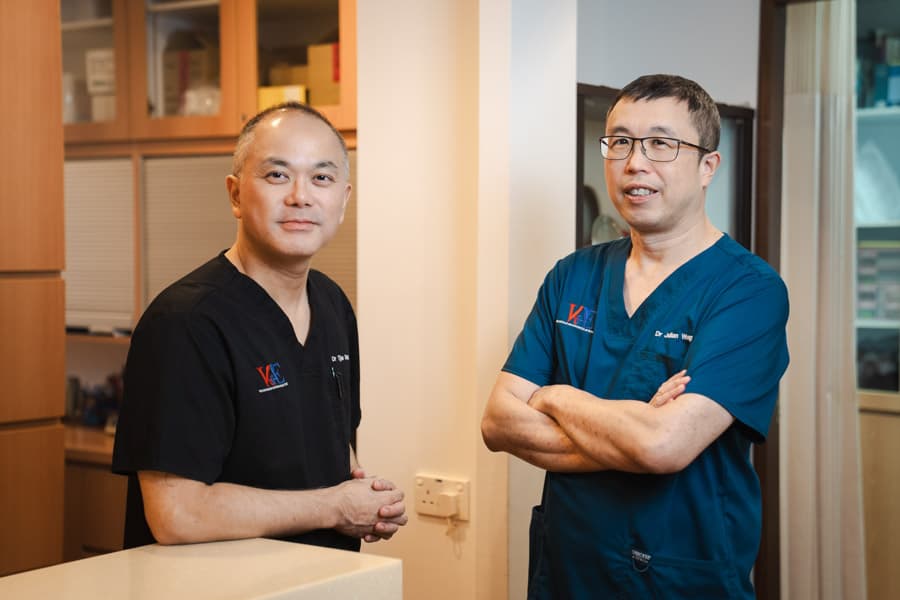
Dr Julian Wong and Dr Tang Tjun Yip
Senior Vascular and General Surgeons
Dual accredited in the UK and Singapore (SMC and GMC)
Overview:
Hernia treatment usually means surgical repair.
A hernia forms when fat or part of the bowel pushes through a weak area in the abdominal wall, most often in the groin. It does not heal without surgery.
A general surgeon closes the gap with stitches and a mesh through open or keyhole surgery, and most patients go home the same day. A small hernia with few symptoms can sometimes be monitored first.
What Is a Hernia?
A hernia is a bulge of fat or bowel that pushes through a weak spot in the muscle an connective tissue of the abdominal wall. The abdominal wall normally holds the organs in place. A defect in it lets tissue slip outward whenever pressure inside the abdomen rises.
Groin hernias are common. A 2008 review in the BMJ puts the lifetime risk at 27% for men and 3% for women. The bulge often shows when you cough, lift or stand for a while, and shrinks again when you lie down.
What Are the Types of Hernia?
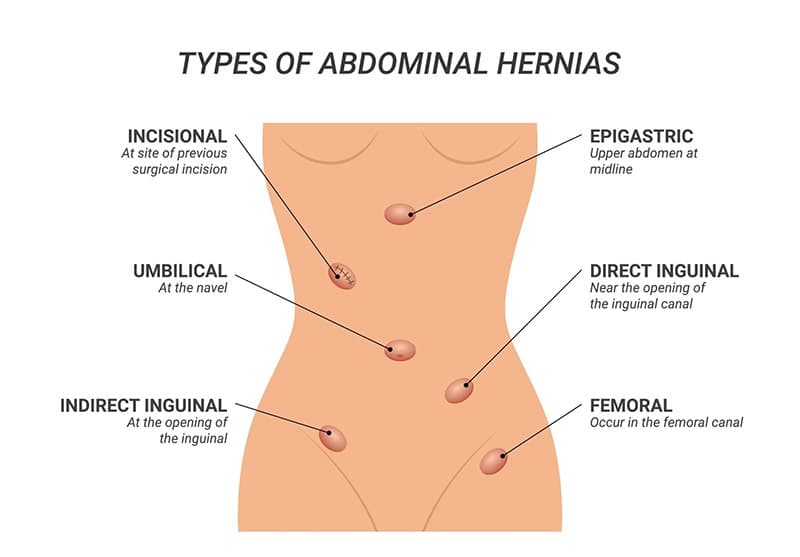
Hernias are named after the place where they form. These six types account for most of the
hernias a general surgeon sees.
| Type | Where it forms | More common in | What you may notice |
|---|---|---|---|
| Inguinal | Groin, above the thigh crease | Men | A lump in the groin that can reach the scrotum |
| Femoral | Upper thigh, just below the groin crease | Women | A small lump low in the groin |
| Umbilical | At or near the belly button | Babies, pregnant women and adults carrying extra weight | A bulge at the navel |
| Incisional | Through the scar of an earlier operation | People who have had abdominal surgery | A bulge along an old scar |
| Epigastric | Midline, between the breastbone and belly button | Adults | A small, firm lump in the upper abdomen |
| Hiatus | Where the stomach meets the diaphragm | Adults over 50 | Heartburn and reflux, with no visible lump |
Inguinal hernias make up about three in four abdominal wall hernias, according to the same BMJ review. A hiatus hernia is different because part of the stomach slides up into the chest, so it causes reflux and is often managed with medicine. The term sports hernia describes a groin muscle and tendon strain in active people, and it involves no actual gap in the wall.
What Are the Symptoms of a Hernia?
The main symptom of a hernia is a soft lump that you can often push back in, usually in the groin or around the belly button. Many people also feel an ache or a dragging sensation that builds through the day or after lifting. Some hernias cause no discomfort at all.

Hernia Symptoms in Men
Men usually notice a lump in the groin that grows when they strain or cough. An inguinal hernia can extend into the scrotum, causing swelling or heaviness on one side.
Hernia Symptoms in Women
Women develop femoral and umbilical hernias more often than men do. A femoral hernia is small and sits low in the groin, so groin or pelvic pain is often the first sign. The 2018 HerniaSurge international guidelines advise prompt repair of femoral hernias because they become trapped more often than inguinal hernias.
When Is a Hernia an Emergency?
A hernia is an emergency when it turns hard, tender or discoloured and cannot be pushed back in. Vomiting, a swollen abdomen or being unable to pass wind add to the concern. These signs point to an incarcerated (trapped) or strangulated hernia, where the blood supply to the tissue is cut off. Go to A&E or call 995 straight away.
What Causes a Hernia?
A hernia is caused by pressure inside the abdomen pushing against a weak area of the abdominal wall. Some people are born with a weaker spot, such as a passage in the groin that never fully closed. For others, the wall weakens with age, repeated strain or an earlier operation.
Factors that raise the risk include:
- Chronic cough or constipation
- Heavy lifting at work or in the gym
- Pregnancy
- Excess body weight
- Previous abdominal surgery, which can lead to an incisional hernia
- Smoking
- A family history of hernia
Can a Hernia Heal Without Surgery?
No. A hernia cannot heal without surgery, because the defect in the abdominal wall does not close by itself. Most hernias grow slowly over the years.
| Common belief | What actually happens |
|---|---|
| "Exercise will make it go away" | Exercise builds general fitness, yet the gap stays open. Some moves raise abdominal pressure and enlarge the bulge. |
| "A hernia belt will fix it" | A belt or truss eases discomfort for a while. It holds the bulge in without repairing it. |
| "If it does not hurt, it is not serious" | Painless hernias still grow, and any hernia can become trapped. |
| "Surgery means a long recovery" | Many repairs are day surgery, and most people return to light activity within two weeks. |
How Do Surgeons Decide on Hernia Treatment?
Surgeons decide on hernia treatment after a physical examination, sometimes followed by an ultrasound or CT scan. During the examination the surgeon feels the area while you stand and cough. A scan helps when the hernia is small, hard to feel or painful without a visible lump.
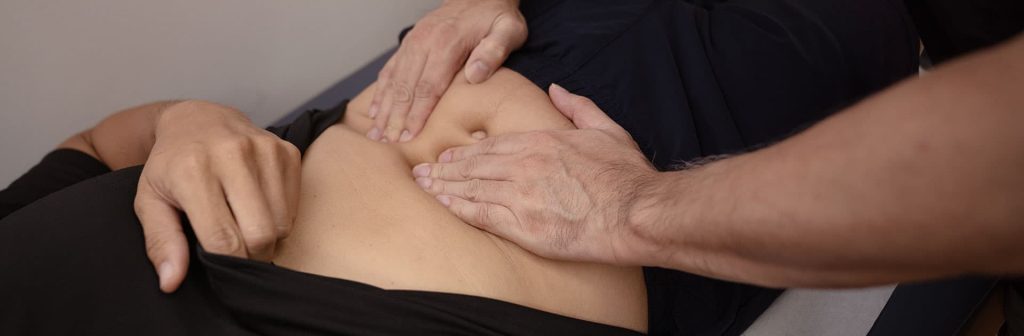
Whether to monitor or repair then rests on the type of hernia and how much it affects your daily life.
| Your situation | Usual approach |
|---|---|
| Small inguinal hernia in a man with few or no symptoms | Watchful waiting with regular reviews |
| Hernia that aches, is growing or limits daily activity | Planned repair |
| Femoral hernia | Repair, even without symptoms |
| Hernia that is hard, painful and will not go back in | Emergency surgery |
What Are the Surgical Options for Hernia Repair?
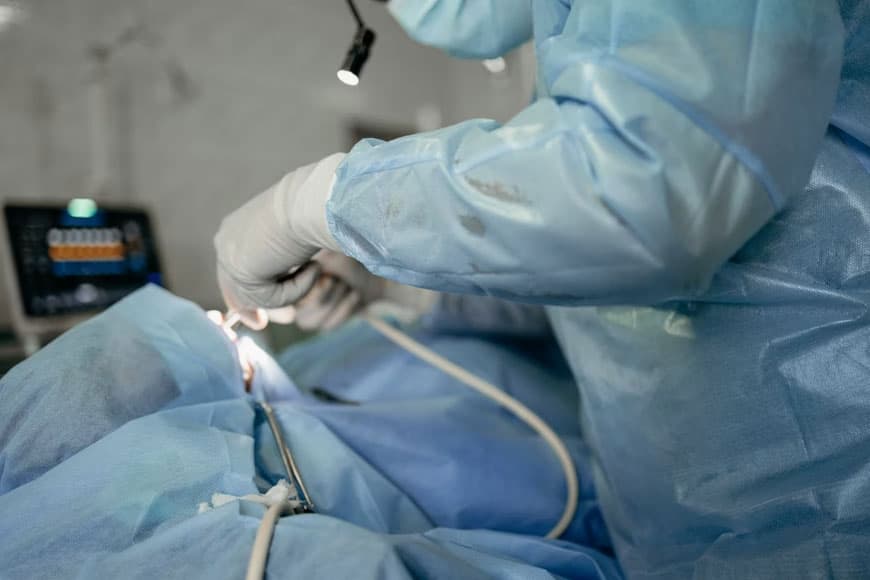
Hernia repair uses either open surgery through one cut over the hernia or keyhole (laparoscopic) surgery through small cuts with a camera. Both methods usually place a mesh to reinforce the weak area and lower the chance of the hernia returning.
| Open repair | Keyhole (laparoscopic) repair | |
|---|---|---|
| How it is done | One cut of a few centimetres over the hernia | Two or three small cuts, with a camera and fine instruments |
| Anaesthesia | Local, regional or general | General |
| Often suited to | A single hernia repaired for the first time | Hernias on both sides or ones that have come back |
| Back to light activity | One to two weeks | Around one week |
Your surgeon recommends an approach after looking at the hernia and your medical history. Types of Hernia Mesh compares the synthetic and biological options, and from diagnosis to recovery: hernia treatment and surgery walks through the operation step by step.
How Long Does Recovery Take After Hernia Surgery?
Most people return to desk work within one to two weeks and to heavy lifting after four to six weeks. Patients usually go home the same day or the next morning, and walking starts on day one.
| Activity | Usually possible after |
|---|---|
| Short walks | Day one |
| Showering | One to two days |
| Desk work | Desk work One to two weeks |
| Driving | When you can brake hard without pain, often one to two weeks |
| Light exercise | Two to four weeks |
| Heavy lifting and strenuous sport | Four to six weeks |
Contact the clinic if you develop a fever, spreading redness, increasing swelling or pain that keeps getting worse
Where Can I Get Hernia Treatment in Singapore?
VEC Specialists Group treats hernias at its clinic in Parkway East Medical Centre, 319 Joo Chiat Place. Dr Julian Wong and Dr Tang Tjun Yip assess and repair abdominal wall hernias as part of the clinic’s General Surgery service. Hernia repair is generally claimable under MediSave, and the clinic works with Integrated Shield plans from insurers such as AIA, Great Eastern and Prudential.
Frequently Asked Questions
Is hernia surgery a major operation?Most hernia repairs are routine procedures done as day surgery. Large or recurrent hernias may need an overnight stay. |
How long does hernia surgery take?A standard repair takes about 30 to 90 minutes, depending on the size and type of hernia. |
Can a hernia come back after surgery?Yes, although mesh repair has made recurrence less common. Avoiding heavy lifting during recovery lowers the risk. |
Can I exercise with a hernia?Walking and light activity are usually fine. Hold off on heavy lifting and straining until a surgeon has assessed the hernia. |
Is hernia surgery claimable under MediSave?Hernia repair is generally claimable under MediSave, and many Integrated Shield plans cover it. Our team can check your cover before surgery. |
How much does hernia surgery cost in Singapore?The cost depends on the repair method, the hospital and your insurance. We give you an estimate after your consultation. |
References
Hemorrhoids are treated as part of our general surgery service. Dr Julian Wong and Dr Tang Tjun Yip are Senior Vascular and General Surgeons, both dual accredited in the UK and Singapore and registered with the Singapore Medical Council and the General Medical Council. Between them they hold close to 50 years of surgical experience. Dr Wong trained and practised as a Consultant General and Vascular Surgeon in the NHS in the UK before returning to Singapore, and previously headed a hospital surgical division here. He also serves as an examiner for the Royal Colleges of Surgeons and as Chief Examiner for the MRCS.